Outline Itinerary
• Day 01 : Arrival in New Delhi
• Day 02 : New Delhi – Leh (Flight)
• Day 03 : Leh
• Day 04 : Leh – Ulley ( 77 km, 3 – 4 hrs drive)
• Day 05 - 10 : Ulley
• Day 11 : Ulley – Leh – New Delhi ( 77 km, 3-4 hrs drive + flight)
• Day 12 : New Delhi – Ranthambhore (390 km, 07 hrs drive)
• Day 13 - 15 : In Ranthambore National Park
• Day 16 : Ranthambhore – Jaipur (180 km, 4 hrs drive)
• Day 17 : Jaipur – Bera (390 km, 07 hrs drive)
• Day 18 - 19 : Bera
• Day 20 : Bera – Ahmedabad (280 km, 5-6 hrs drive)
• Day 21 : Ahmedabad – Sasan Gir (350 km, 7 hrs drive)
• Day 22 - 23 : Sasan Gir
• Day 24 : Sasan Gir – Rajkot – New Delhi (180 km, 04 hrs drive + Flight)
• Day 25 : New Delhi – Fly Home
The Big Cats of India Safari Tour Overview
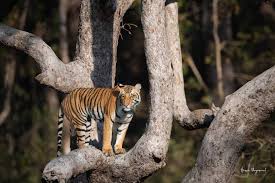
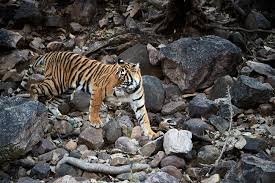
All four of the big cats seen in the wild may be found in India, which is unique in the world. Tigers, Asian lions, snow leopards, and Indian leopards are all celebrated there. There's no need to introduce these beautiful creatures. The Big Cats of India Safari Tour is a thrilling adventure that takes visitors to Northern India to see some of the most powerful animals that have ever lived on Earth. A tiger safari and a leopard safari are also included in the tour's schedule.
We will make sure that everything on your list is taken care of, whether it's the secret rosettes or the royal stripes, while you pass through some of the most stunning landscapes our nation has to offer. As you journey from the scrub forests of Gir National Park to the snow-covered grandeur of the mesmerizing Himalayas, you will have the chance to see the magnificent Lion, the fabled Tiger, the elegant Leopard, and of course, the elusive Snow Leopard. You'll get the chance to witness some of the world's rarest and most sought-after animals on this once-in-a-lifetime journey, which will have your heart racing for what seems like weeks on end.
DETAILED ITINERARY
Day 1: Arrival in New Delhi
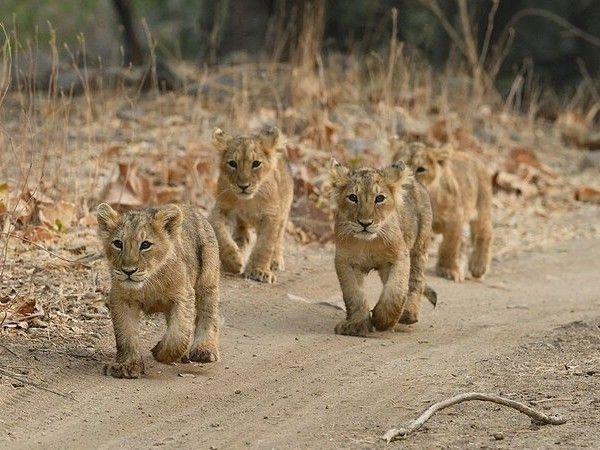
Our representative will meet you when you arrive at the New Delhi Airport. He will make sure your
transfer to the hotel goes smoothly and assist you with check-in. You will be given all of the travel-related
paperwork and given an explanation. Stay the night at the hotel.
Day 2: New Delhi – Leh (Flight)
You will be driven to the airport on the first day after breakfast in order to board flight G8 225 at 8:40
a.m. You're going to Leh. You will be met at the Leh airport by a representative of our company, who will
then transport you to the hotel. Traveling from Delhi to Leh will quickly raise your altitude by 3,000
meters, thus you will require the highest level of acclimatization of anyone visiting this area. We'll stay
overnight at a hotel in Leh.
Day 3 : Leh
Following breakfast that morning, drive down the Indus River to look for waders, dippers, and other
birds like ducks, harriers, and ibisbills. Spend the day taking in some of the sights of Leh, which is
sometimes referred to as Little Tibet because of the wide variety of Tibetan culture that can be observed
there. The Shanti Stupa, the Leh Palace, and Namgyal Tsemo are some of the most popular tourist
destinations in Leh. We'll stay overnight at a hotel in Leh.
Day 4 : Leh – Ulley ( 77 km, 3 – 4 hrs drive)
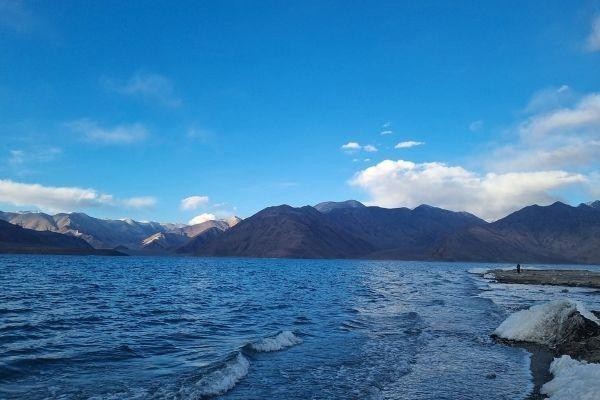
After breakfast, head for Ulley, the snow leopards' home in the western region of Ladhak. The Tibetan
Plateau is Ulley's location. While traveling to Ulley, you will pass over the Himalayas, the largest natural
formation in the world. At Nimoo, you will pause for a tea break and get the chance to see Likir
Monastry. One of the most attractive settings is this monastery, which is situated on a tiny hill in the
middle of a valley. You ought to go to Ulley after that. After you get there, check in at the hotel. They had
dinner and overnight accommodation at Ulley's lodge.
Day 5 : Ulley
From so on, your daily schedule will be dictated by the snow leopard's activities across the area. You will
either be trekking or camping during the day, depending on the Ghost Cat's movements. You can leave
the lodge whenever you like to start your search for a Snow Leopard in the early morning hours
following breakfast. The resort overlooks the stunning landscape of the enormous cliffs, which are the
ideal habitat for a snow leopard. Utilizing a scope, the scan is started. If you are fortunate enough, you
may be able to observe wolves, ibex, snow leopards, and other wildlife without ever leaving the lodge. If
a chance does not arise, a spotter will already be on duty searching for a snow leopard at a higher
altitude, which, on foot, takes around two to three hours. You will have your potter on hand to help you
with the camera and any other equipment you might need. Explore the surroundings throughout the day
in search of various living forms that can endure such severe circumstances. All meals and overnight
lodging were provided by the Ulley resort.
Day 6 - 8 : Ulley
Everything you do depends entirely on the Snow Leopard's behavior right now. In the early hours of the
morning, the resort will begin its search for the Ghost Cat. After breakfast, you can attempt the about
one-hour hike to Sangpo Nala if you are unsuccessful in the area close to the resort. With a considerably
higher success rate than other places, the area has a lengthy history of generating amazing sightings. You
will spend the day looking for the Snow Leopard on the cliffs. The trans-Himalayas have no precipitation
at all throughout the year due to the vapor-carrying winds and exceptionally high wind speeds.
There are several advantages to taking this tour, but one of them is that each person will share a
fascinating fact about a snow leopard. We will find out about any snow leopard sightings and visit the
location, even if it is reported by a villager. The Ulley resort supplied all meals and overnight lodging.
Day 9 - 10 : Ulley
If your search has been unsuccessful, or if you have already seen a Snow Leopard, you may want to try
one of the nearby alternate locations, such as the settlements of Saspoche and Hemis Shukpachen.
Furthermore, wolves and snow leopards have been sighted in and around these two settlements on
multiple occasions. It is reported that a pack of five to eight wolves frequently visits the area between
these two villages. They have made these areas part of their home territory. In the Trans-Himalayas, you
may encounter the Asiatic Ibex, Himalayan Thar, Blue Sheep, Marmot, Red Fox, Eurasian Lynx, Tibeten
Wolf, Palla's Cat, and many other species while hiking and searching for the Snow Leopard. The Asiatic
Ibex's coat adds a bluish tint to its greyish appearance, which helps it fit in with its surroundings. The
Ulley resort supplied all meals and overnight lodging.
Day 11 : Ulley – Leh – New Delhi ( 77 km, 3-4 hrs drive + flight)
After breakfast, leave the lodge with priceless memories of the snow-capped mountains and head to Leh
to catch a flight (SG 124), which departs at 1220 hours and arrives in Delhi at 1340 hours. When you
arrive, our representative will greet you at the airport and assist with your hotel transportation. Spend
the night in a hotel in New Delhi.
Day 12 : New Delhi – Ranthambhore (390 km, 07 hrs drive)
Our representative/driver will pick you up at the hotel in the morning after an early breakfast and assist
with your transfer to Ranthambhore National Park, which is 390 km away and takes about 7 hours to
travel. Check in at the lodge when you arrive. Dinner, overnight stay, and evening leisure at the
Ranthambhore lodge.
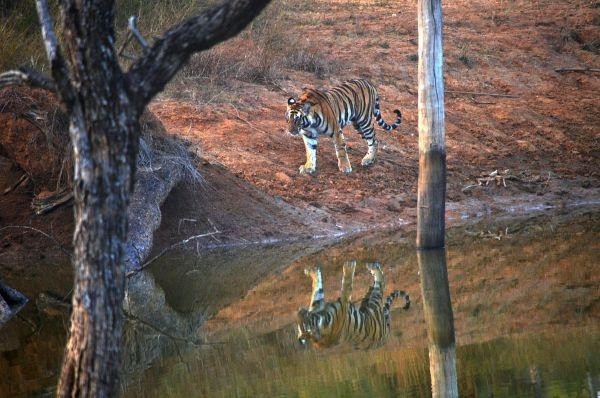
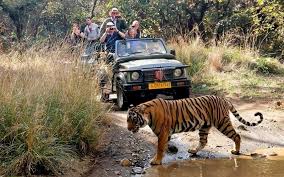
Day 13: Ranthambore National Park
You should start your daily routine well before the sun comes up in order to prepare for the Tiger Safari
in Ranthambhore. You will start your morning safari by getting into your car and driving to the park
entrance, where you will arrive well before dawn.
One of the greatest places to see wild animals close to the meeting point of the Aravali and Vindhya hill
ranges is Ranthambore National Park, where the animals are accustomed to the attention they receive.
When the Sawai Man Sing Sanctuary is included, the 400 square kilometer Ranthambhore National Park
area grows to about 500 square kilometers. In between the Aravalli and Vindhya ranges, the thousand
year-old fortress that overlooks the forest and includes the steep hill crests that descend to large valleys
was given the name "Ranthambhore." The park gets its name from the stronghold. Fruit tree orchards
and ponds can be seen along the edges of these valleys. The area noted for tiger sightings,
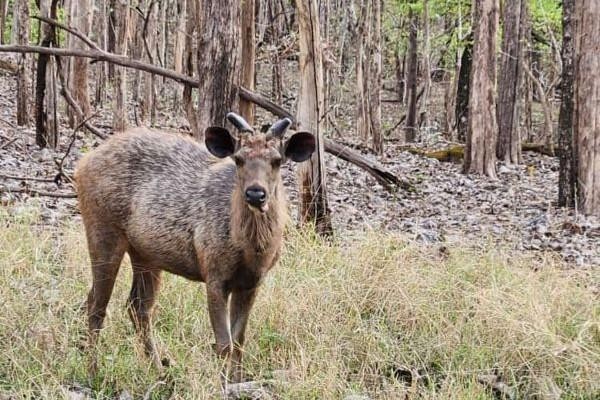
Ranthambhore, is a unique location since it is at the nexus of the natural and historical realms. Sambar,
cheetal, chinkara, nilgai, and languor. Tigers and leopards, which are famously hard to notice, live in this
reserve. Here, safari-goers have a very high possibility of seeing tigers. Around 10 in the morning is when
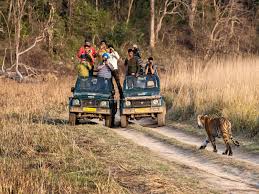
you should return from the safari. In the afternoon, you will embark on a Jungle Safari to search for the
majestic tiger after lunch at the lodge. Dinner and overnight accommodation were supplied by the
Ranthambhore resort.
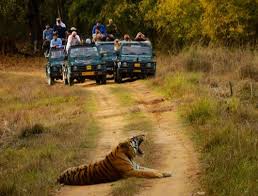
Day 14 - 15 : Ranthambore National Park
An early morning and late afternoon car safari inside the National Park. The guests' overnight lodgings
and all meals were provided by the Ranthambhore lodge.
All of the views, lighting, backgrounds, and innumerable different frames might be found in a single park.
With almost 300 distinct types of birds living there, Ranthambhore is sometimes referred to as a
birdwatcher's paradise. Indeed, the region of Ranthambhore and its environs is a genuine paradise for
bird lovers. Many of the regular winter migrants, including great horned owls, painted spurfowls, sarus
cranes, bronzed winged jacanas, sandpipers, kingfishers, nightjars, painted sandgrouses, and large
cormorants, come to Ranthambhore and the surrounding areas from their breeding grounds north of the
Himalayas.
Day 16 : Ranthambhore – Jaipur (180 km, 4 hrs drive)
Jeep safari in the morning within the National Park. Check out of the lodge after lunch, then head to
Jaipur. The journey to Bera will be broken down in Jaipur. Spend the night in the Jaipur hotel.
Day 17 : Jaipur – Bera (390 km, 07 hrs drive)
The journey to Bera, which is around 390 kilometers long and takes about 7 hours, will start when you
check out of the hotel following an early breakfast. Check in at the lodge when you arrive. The Jawai
Dam is located in Rajasthan, not far from the city of Bera. It is famous because of the amazing leopard
sightings that sometimes occur there. Instead of being in a forest, you will be in a sandy town where
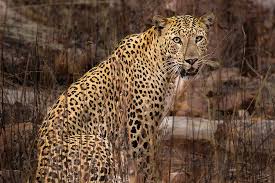
leopards may be visible. This is a unique occasion. Bera is a well-liked location for wildlife enthusiasts
because it is home to a wide diversity of birds and mammals. The elusive leopard, the powerful bluebull,
the crocodile, the ever-so-mischievous hyena, the elegant pelican, the Greylag Goose, Robin Accentor,
Demoiselle Crane, and Barheaded Goose are just a few of the creatures that visitors to Bera may be able
to view. When you arrive for your late-night safari, you will only be interacting with leopards. Dinner is
followed by an overnight stay at the hotel with a safari theme.
Day 18 - 19 : Bera
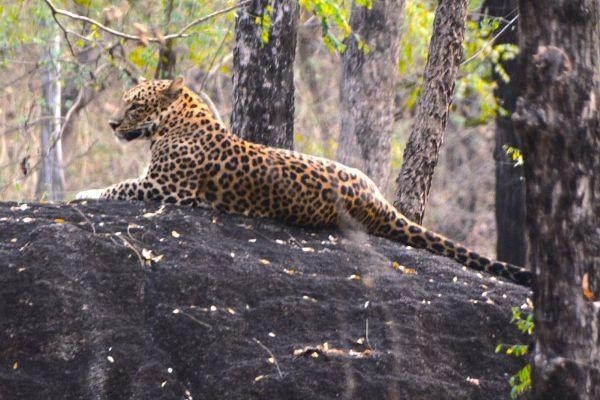
To witness the golden dawn over Rajasthan, which happens when the sun rises over this arid region, you
will start your safari early in the morning. The main attraction for visitors to this area is the leopard. But
there are other kinds of animals that call it home, and one of the most popular ones are the marsh
crocodiles. Are they performers, 15-foot giants that can deceive everyone with their slumbering lies?
They might have the same level of energy when they are hunting as when they are not doing anything.
We have to be on the lookout for them because they are motionless and can easily blend in with the
muddy and rusty ground near the reservoir. They spend the whole day in the sun, and when they are
hungry, they just jump into the lake, where there are lots of fish to eat. This makes it difficult to see them
when they are moving, but it is impossible to miss them when you are relaxing on the beach on a sunny
day.
The afternoon will see the commencement of the jeep safari again. The Bera lodge offered lodging for
the night as well as all meals.
Day 20 : Bera – Ahmedabad (280 km, 5-6 hrs drive)
Our last jeep safari in Bera was about to begin as the morning broke. You will remember Bera's boulder
dominated terrain for a very long time. The trip to Ahmedabad, which is around 280 kilometers away
and would take five to six hours to get there, will begin after you check out. Ahmedabad is used once
more as a stopover on the route to Sasan Gir, the Asiatic Lion's home. Upon arrival, kindly check in at the
hotel. In Ahmedabad, spend the night at the nearest hotel.
Day 21 : Ahmedabad – Sasan Gir (350 km, 7 hrs drive)
After an early or packed breakfast, depart the hotel and make the 350-kilometer drive (about seven
hours) to Gir National Park. Check in at the lodge when you arrive. In the afternoon, a jeep safari is
planned. Overnight and dinner at the Gir lodge.
Day 22 : Sasan Gir National Park
Both morning and afternoon car safaris are offered inside the National Park. Being native to the region,
the guides are able to impart a lot of knowledge about the parks. It is possible to identify the area in
which to look for a certain lion when one is familiar with its territory. They have been around these lions
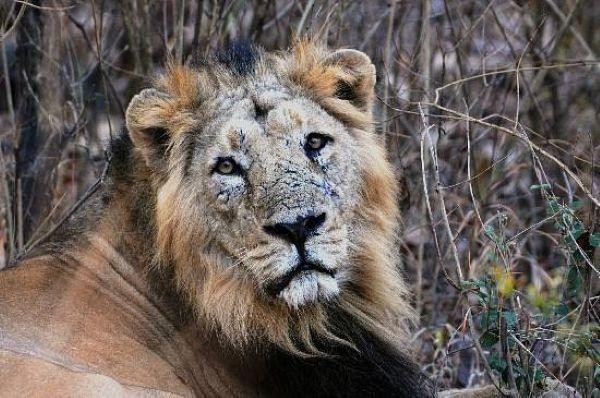
since the day they were born. The only location outside of Africa where people can witness lions
wandering freely in their native habitat is Gir National Park. Compared to their African cousins, which
have thicker manes, Gir lions are larger, with greater tail tassels, elbow tufts, and prominent belly folds.
Gir lions are typically 2.75 meters long. The Gir lion is among the most exquisite creatures on the planet
because of these traits. Along with lions, the Gir forest is home to more than 350 different species of
birds and 38 other mammal species. Additionally, there are about 1,000 big cats in this area, both inside
and outside the National Park. There are roughly 500 lions and an equal number of leopards in Sasan Gir,
according to the most recent data available.
All meals and overnight accommodations were provided by the Gir resort.
Day 23 : Sasan Gir National Park
Both morning and afternoon jeep safaris are offered throughout the National Park. The Gir lodge offered
lodging for the night as well as all meals. The Gir National Park and Sanctuary, situated in Gujarat's
Saurashtra region, is in charge of protecting the country's greatest continuous stretch of dry deciduous
forest. The entire size of the region is 1412 square kilometers. With 606 distinct plant species, 39
mammal species, 37 reptilian species, more than 300 bird species, and more than 2,000 insect species,
Gir's biodiversity has allowed it to develop into a very stable ecosystem with an amazing ability to
regenerate, support, and sustain itself.
As a nesting ground for migratory birds, the Gir avifauna is home to many raptor species and many other
significant species, including the Red-headed Vulture, Osprey, Indian Pitta, and Lesser Florican. A wide
variety of reptiles, including Marsh crocodiles, Indian pythons, and Indian star tortoises, which comprise
one of the greatest populations of their respective species in the country, can also be found there.
Day 24 : Sasan Gir – Rajkot – New Delhi (180 km, 04 hrs drive + Flight)
Jeep safari in the morning within the National Park. Check out of the lodge after lunch and head to the
Rajkot airport in time to catch a flight to New Delhi at 1930. Our representative will greet you at the
airport and take you to the hotel when you arrive. Spend the night at the New Delhi hotel.
Day 25 : New Delhi – Fly
Home
After an enjoyable breakfast in the morning, depart the hotel and make your way to the international
airport in order to catch a flight home or to continue your vacation.