Outline Itinerary
• Day 01 : Arrival in New Delhi
• Day 02 : New Delhi – Corbett (275 kms/5 hrs drive)
• Day 03 : In Corbett National Park
• Day 04 : In Corbett National Park
• Day 05 : Corbett National Park – Agra (192 miles/6 hour drive)
• Day 06 : Agra – Ranthambore (275 kms/6 hrs drive)
• Day 07 : Ranthambore National Park
• Day 08 : Ranthambore National Park
• Day 09 : Ranthambore National Park – Jaipur (111 miles/3 hour drive)
• Day 10 : Jaipur – New Delhi (170 miles/6 hour drive)
• Day 11 : New Delhi – Raipur – Kanha (Flight + 210 kms/4 hrs drive from the airport)
• Day 12 : In Kanha National Park
• Day 13 : In Kanha National Park
• Day 14 : Kanha – Bandhavgarh (280 kms/6 hrs drive)
• Day 15 : In Bandhavgarh National Park
• Day 16 : In Bandhavgarh National Park
• Day 17 : Bandhavgarh – Khajuraho (280 kms/6 hrs drive)
• Day 18 : Khajuraho – Varanasi (Flight)
• Day 19 : In Varanasi
• Day 20 : Varanasi – New Delhi (Flight)
TEMPLES, TAJ & TIGER SAFARI TOUR OVERVIEW
When considering the essential elements of India, tigers, the Taj Mahal, and temples rank highest on the list.
Together with the enigma of Indian tradition and culture, this trip to India, which includes a safari in search of tigers and a tour of the Taj Mahal, offers the perfect balance of untamed wildlife, deep spirituality, and religious observance. You're in for a once-in-a-lifetime experience, whether it's the stunning Taj, the intricately carved temples of Khajuraho, or the religious celebrations of Varanasi. Renowned tiger safaris in Bandhavgarh, Kanha, and Ranthambore national parks are combined in one trip. A trip to these amazing places will undoubtedly revitalize the body, soul, and mind as you embark on a journey of natural and cultural exploration.
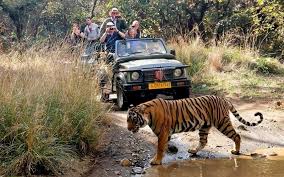
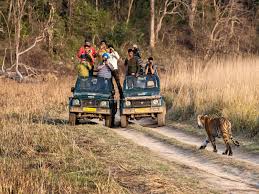
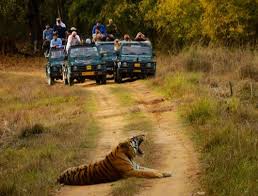
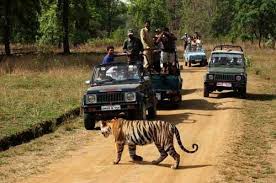
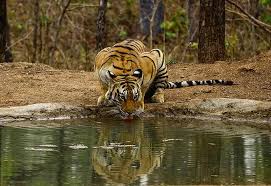
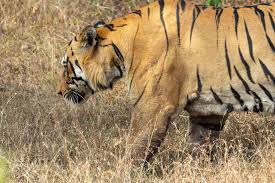
Tiger safaris in four of India's most well-known national parks are included in the Taj Mahal and Tiger Safari package. These include Ranthambore National Park in western India, Corbett National Park in the terai zone, and Bandhavgarh and Kanha National Parks in central India.
The Taj Mahal is an amazing piece of white marble that was built more than three centuries ago, and the cultural component of the trip to India that includes a safari in search of tigers and a visit to the Taj Mahal will leave you speechless. This magnificent building, which is deservedly regarded as one of the seven wonders of the world, will move your heart in the same way that its exterior would. In terms of sheer splendor, it is unmatched.
When you travel to Varanasi, India's spiritual hub, you will feel as if you have stepped into the presence of God. It is widely believed that bathing in the Holy Ganges can cleanse one's body, mind, and spirit of the sins accrued during a lifetime. The river must have some significance if it is the source of 1.3 billion people's religion. The spiritual journey does not end in Varanasi. We transport you to Khajurao as well. Khajuraho, a city in central India, is home to temples that have been around for a thousand years and have sexual carvings of Lord Shiva and Goddess Shakti.
We also take you to Khajurao on this amazing vacation to India, which also includes a tiger safari and a visit to the Taj Mahal. Khajuraho, a city in central India, is home to temples that have been around for a thousand years and have sexual carvings of Lord Shiva and Goddess Shakti.
DETAILED ITINERARY
Day 1: Arrival in New Delhi
When you get to the New Delhi Airport, a representative of our company will meet you. This
individual will help you check in at the hotel and ensure that your transfer to the hotel goes smoothly.
All of the travel documents will be supplied to you, along with an explanation of their purpose. It
includes spending the night at the hotel.
Day 2: Drive To Corbett National Park (170 Miles)
Checking out is the next step after a delicious breakfast. To get to Corbett National Park, drive there. If
you drive this distance, it will take you five to six hours. It's 275 kilometers away. Our officials, a guide,
and a driver will be waiting for you when you get to Corbett. Upon your arrival, they will help you
transfer your belongings onto a safari jeep. This jeep will take you around 32 kilometers from the gate
to the Dhikala Forest Lodge. Once lunch and check-in are finished, you will embark on a safari in the
Dhikala Zone.
Go back when the sun sets. Both supper and overnight accommodations were offered by the Forest
Rest House.
Day 3 & 4: Corbett National Park
Jim Corbett was a British tracker, hunter, conservationist, naturalist, and author. He wrote as well. His
help was often called upon by the authorities to rid the United Provinces of the man-eating Tigers. His
transformation occurred during these journeys. All those who are interested in the natural world
should read his works. The seemingly simple exchange between "shooting a Tiger with the rifle" and
"shooting a Tiger with a camera" has been deftly explained. It is quite uplifting to hear about his
journey as a conservationist and the factors that led him to prioritize wildlife conservation above
hunting. In honor of his outstanding contribution, the Indian government chose to rename the
Ramganga National Park the Jim Corbett National Park.
Similar to all other national parks in the nation, Corbett National Park has multiple separate zones and
gates. All of them are beautiful in their own right. However, you will find the most cinematic scenery
in the Dhikala zone (you may call us biased if you like). There are a couple of extremely basic
woodland rest houses in this area, equipped with the bare necessities. The statement that the sight is
simply breathtakingly beautiful is not hyperbole. Picture yourself sleeping in the middle of a deep
forest and waking up to the sight of new Tiger pug markings outside your cottage. There is nothing
that compares to the exhilaration. However, the areas of Sultan, Khinanauli, Sarpaduli, Gairal, and
Malani are equally beautiful and enchanting as Dhikala. They all possess a distinct charm and awe
inspiring attributes. The Shivalik Mountains add grandeur to the areas, just like the Ramganga River
enhances the beauty of the landscape.
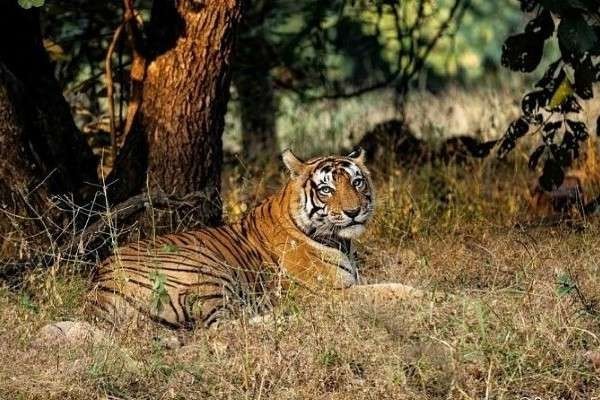
Jim Corbett National Park is one of the elements that make up the Terai Arch Landscape. The Terai
region's tiger population is known to be cautious, and when observed, they usually escape the area
right away. In the last several years, nevertheless, it seems that the trend is changing. As they get
acclimated to their new environment, the tigers are starting to show up more frequently. There are
fantastic photographic chances at every spot in Corbett, as well as on every route and backdrop.
Whether you are able to get your selected animal—the elephant or the tiger—on the track, your sense
of happiness will soar.
In addition to the mammal species that draw people to this place, Corbett National place is home to
about 535 different species of birds.
The safaris should be taken early in the morning and late at evening on both days. In addition to
lodging, the Lodge will serve meals.

Day 5: Corbett National Park – Agra (192 miles/6 hour drive)
You must check out early in the morning after breakfast. Make your way 310 kilometers to Agra by car.
It should take you about six hours to do this. Arrive in Agra by the latest in the afternoon. Enjoy the
day as you see fit. In Agra, a hotel for dinner and overnight stay.
Day 6 : Agra - Ranthambore
The following morning, take in the breathtaking architecture and design of the Taj Mahal, which is
commonly considered to be one of the seven wonders of the world. It was built in the mid-1700s as a
monument of love for his wife, Mumtaz, by the Mughal emperor Shah Jehan. This exquisite tomb was
built with the time and labor of over 20,000 people from all around the world. White Makrana marble
served as its everlasting material, while onyx, amethyst, lapis lazuli, turquoise, jade, crystal, and a
number of other semi-precious stones that were imported from distant places like Tibet, China, and
the Indian Ocean were used to adorn it. After lunch, travel to Ranthambore. Check in when you get to
your safari lodge. You should prepare for the afternoon safari after lunch. (It is crucial to remember
that on Fridays, guests will not be permitted entry to the Taj Mahal.)
Day 7 & 8: Ranthambore National Park
You should visit the Ranthambore National Park for the morning and evening tiger safaris on both
days.
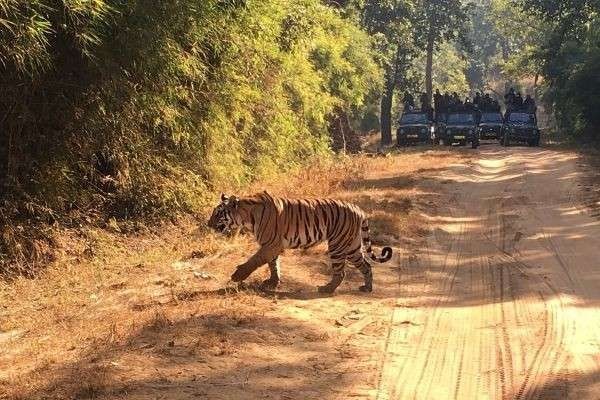
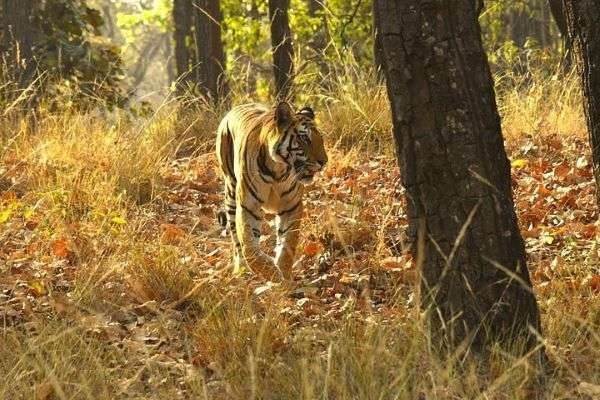
Much of the park is divided into ten different zones, most of which are home to thriving tiger and
other wildlife populations. One of the first national parks to host the initiative was Ranthambore
National Park, when Project Tiger was first launched. Over the previous century, its tiger population
has fluctuated, but within the last ten years, Ranthambore's population has been rather stable. It was
so successful that it was able to provide a few tigers to Sariska National Park, which was short on
tigers due to poaching.
Ranthambore's success, which includes a healthy tiger population, is entirely down to the diligent
Forest Department and the travel and tourism sector. The Indian state of Rajasthan is home to the
Ranthambore Tiger Reserve. It consists of a number of discrete regions, each with a particular
conservation history. With only a few short pathways linking them to Ranthambore National Park, the
reserve's main location, these regions are likewise geographically separate from one another. Most of
these can be found at Sawai Mansingh Sanctuary, Keladevi Sanctuary, and Ranthambore National
Park.
The breathtaking Ranthambore National Park, a photographer's paradise, is a stop on both the Indian
Golden Triangle Tour and the Tiger Safari. Because there are so many varied lighting, perspective, and
backdrop options, as well as the ability to use any frame you choose for photos, Ranthambore is
stunning in its own special way. Furthermore, the park's boundaries may contain more than 300
different species of birds. In actuality, Ranthambore National Park and its environs are a birdwatcher's
paradise.
Among the important species that migrate annually from their breeding grounds north of the
Himalayas to Ranthambore and the surrounding areas for the winter are the large cormorant, painted
spurfowl, sarus crane, bronzed winged jacana, sandpiper, kingfisher, nightjar, painted sandgrouse, and
great horned owl.
This 400-square-kilometer park, which is surrounded by rugged hill crests that drop to wide valleys
between the Vindhya and Aravali mountains, gets its name from the ancient stronghold that rises
above the forest. Sloth bears, tigers, and leopards are among the many species of plants and animals
that call Ranthambore home. A unique and uncommon place where a historical past and a natural
present coexist is Ranthambore. It is particularly famous for the tigers that may be observed there
throughout the day. Languor, Nilgai, Chinkara, Sambar, and Cheetal. Both tigers and the elusive
leopard can be found in this reserve, and safari travelers have a very good chance of seeing tigers
while on their outings. The ruins of its past glory can be seen scattered throughout the landscape.
These ruins, which resemble palaces or former guard stations, can be chatris or cupolas. All of these
ruins add to the ethereal and magical ambiance of this enormous wilderness.
Day 9: Ranthambore National Park – Jaipur (111 miles/3 hour drive)
After breakfast in the morning, you will check out and go to Jaipur. The 180-kilometer journey will be
completed in about three hours. As soon as you arrive at your hotel, check in. Following a hearty
lunch, you will proceed to explore Jaipur's most well-known sites, including the Museum, City Palace,
Jantar Mantar, and Hawa Mahal. The shopping in this city is another factor that contributes to its
fame. Due to the quantity of rare stones and handicrafts, the culture is far more alive than typical
when you visit the "Jaipuri Bazaar."
Return to the hotel to spend the remainder of the evening unwinding.
Day 10: Jaipur – New Delhi (170 miles/6 hour drive)
After breakfast, it's time to leave the hotel. See the Amer Fort, which was once the residence of the
Rajput Maharajas and their families. A total of four stories make up this opulent palace. This place is
not only a hill fort but also a World Heritage site. This is followed by another five to six hours of driving
over 275 kilometers to India's capital, New Delhi.
Day 11: New Delhi - Raipur (By flight), Raipur - Kanha (By road)
After an early breakfast, proceed to the domestic airport for your flight from New Delhi to Raipur. Our
representative will meet you at Raipur Airport and take you to Kanha National Park.
It will take you approximately 4 hours to drive the 210 kilometers. To get a sense of Kanha, roll down
your windows for the final hour of your drive through the forest. You've entered Rudyard Kipling's world.
After checking into your resort, you can relax for the rest of the day.
Day 12 & 13: Kanha National Park
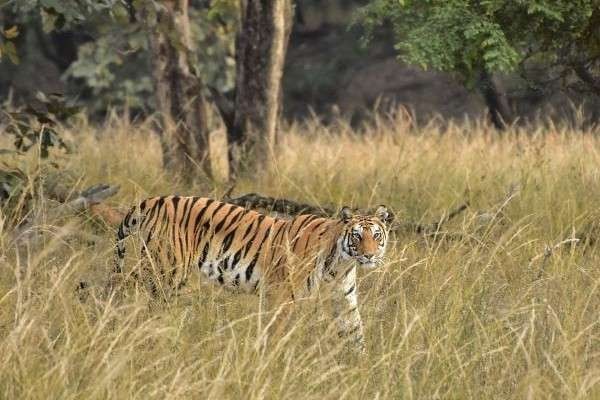
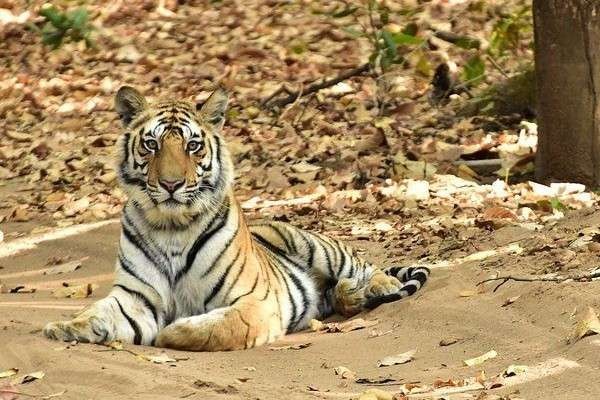
You should go on a tiger safari in Kanha National Park early in the morning and at evening on both days.
Because it served as the inspiration for Rudyard Kipling's beloved novel The Jungle Book, it is among the
most well-known destinations on the Golden Triangle tour that includes a tiger safari. One of India's
biggest and most exquisite parks is Kanha. A wide variety of animals can be seen there as well. In
addition to the many different types of plants and animals that can be found there, it is among the best
places to see tigers. Kanha is home to a number of bodies of water, which draw a substantial number of
both permanent and migratory birds. The dense forest that gradually gives way to grassy meadows
creates an amazing sight. You will receive your breakfast on the bonnet of your jeep from park
personnel.
Refresh yourself at the lodge after the safari in the morning. It's time to begin your afternoon safari in
Kanha National Park's pristine surroundings after a relaxed lunch.
Day 14: Kanha – Bandhavgarh National Park (6-hour drive)
Travel back to the lodge after your early-morning safari. Following an early lunch, you should depart the
hotel and begin the six-hour drive to Bandhavgarh National Park. It should be early evening when you
arrive in Bandhavgarh. You have the rest of the day to do as you like after you have checked into your
Safari Lodge.
Day 15 & 16: Bandhavgarh National Park
On both days, you will have the opportunity to embark on a tiger safari in Bandhavgarh in the morning
and the afternoon.
In addition to being one of Central India's most beautiful parks, Bandhavgarh has a rich and lengthy past.
The fort that rises above the surrounding forest is the reason the park was named after it. Take an
exhilarating ride in the park in the morning, and then return to the lodge in the late afternoon.
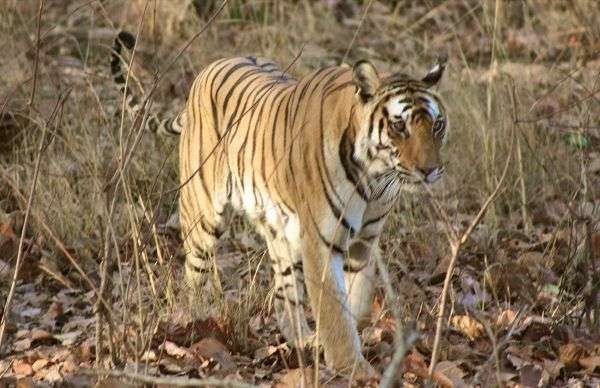
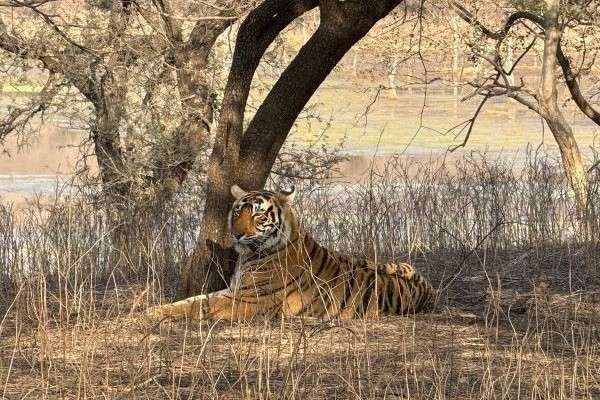
Since this park is so well-known for the high tiger density that exists within its dense sal and bamboo
trees, it is somewhat strange to visit and not see any tigers. In addition to being a great place for tigers to
roam, Bandhavgarh is also home to the leopard, another large cat species. Among the dense foliage in
the treetops, one can spot these elusive creatures as well as a range of resident and migratory bird
species. Wild boars, sloth bears, porcupines, foxes, monkeys, and many other species are among the
many free-ranging animals that call the park home.
Day 17 : Bandhavgarh – Khajuraho (280 kms/6 hrs drive)
After breakfast, have a wildlife drive in the national park before continuing on to Khajuraho. You will
need roughly six hours to drive the 280 kilometers that make up the complete journey. Upon arrival,
check into the hotel. In the afternoon, take a tour of Khajuraho.
Khajuraho, currently India's second-largest tourist destination, was discovered by sheer happenstance.
Khajuraho is home to the largest collection of medieval temples, which are designed to honor the
stylized and refined courtly victories of beauty, love, and the arts. These temples are adorned with
innumerable sculptures that are incredibly delicate and elegant. Between 950 and 1050 AD, the city was
the religious seat of the Chandela Rajputs, and temples were built there. A wall with eight gates encloses
the whole region, and each gate has two golden palm palms on either side. Of the more over 80 temples
that were once there, only 22 are today remarkably well preserved.
The collection of temples at Khajuraho that honor Hindu religious doctrine in its perplexing range of
inclusion and extent is unique among Hindu temples due to its depth and breadth. The existential
philosophy of religion, which honors the ideas of "Yoga" and "Bhoga," is highlighted by the temples.
While "Yoga" alludes to the unification of the self with the Almighty, "Bhoga" refers to the path that
leads to God by sensuous pleasure. This philosophical viewpoint is exemplified by the temples of
Khajuraho, which are dedicated to sexuality and physical pleasure. A must-see destination, Khajuraho
was added to the UNESCO World Heritage List in 1986. India's temples, which portray life in all its guises
and emotions in stone, are a unique gift to the rest of the world. In the evening, Khajuraho hosts a sound
and light show. The hotel in Khajuraho is where you should spend the night.
Day 18 : Khajuraho – Varanasi (Flight)
You should visit the Eastern and Southern group of temples after breakfast in the morning. The
Parasvanath temple, located in the Eastern group, is the biggest Jain temple in that group. Daily activities
are depicted in charmingly detailed detail in the themes. You should also visit the temple of Chaturbhuj,
which is part of the Southern group, and the temple of Kandariya Mahadev, which is devoted to Shiva.
To ensure you arrive at the airport in time for your journey to Varanasi, make your transfer in the
afternoon. Travel to Varanasi from Khajuraho. After being welcomed and helped at the Varanasi airport,
you will be taken to the hotel.
Hindus view Varanasi as the holiest of sacred towns and one of the most important pilgrimage sites in all
of India. Many people consider Varanasi, also known as Kashi and Benaras, to be among the oldest cities
in the world to have been continually inhabited. It has been an important site for intellectual and cultural
interaction for well over two millennia.
Evening: Take a stroll alongside the Ganga River to observe one of its banks, or "Ghats." This tour is particularly fascinating because it allows participants to experience the cultural ethos that guides the lives of the pious. Take in the purification rites done in the river and the ceremonies that are held in response to the sun setting. Along the riverbank, you will see boats gliding down the water, some carrying goods like fruits and vegetables, while others are transporting individuals taking part in religious rituals.
On the banks, you can see some people praying and chanting hymns, others trading, and yet others doing things like shaving their hair, giving massages, and even cleaning their ears! When you cross to the Manikarnika Ghat, you may watch cremation being performed with a lot of ceremony. The deceased spirit is transported to the skies using this method. According to Hindu belief, the city of Varanasi is the doorway to the heavens, and after a person's life ends, their souls may reincarnate "in a higher state." In Varanasi, spend the night.
Day 19 : In Varanasi
Experience the Ganges, India's holy river, by boat at daybreak. This is an excellent way to begin the day.
One of the most beautiful and serene sights to behold at the holy river is pilgrims kneeling in waist-deep
water and praying before the sun rises. The city's ruling deity, Shiva, is worshipped in the well-known
Vishwanath temple. The temple has gold plating on its spires. Make sure you return to the hotel in time
for breakfast.
Explore the city of Sarnath as well. It is located in Uttar Pradesh, India, 13 kilometers northeast of
Varanasi, near the confluence of the Ganges and Gomati rivers. Gautama Buddha delivered his first
discourse on the Dharma in the Sarnath deer park. Additionally, Kondanna gained enlightenment here,
which paved the way for the founding of the Buddhist Sangha. The eleventh Tirthankara of Jainism,
Shreyansanath, was born in Singhpur, a village about a kilometer away from the location. In addition,
Singhpur has a temple devoted to him. In Varanasi, spend the night.
Day 20 : Varanasi – New Delhi (Flight)
You can unwind and pack at your own speed during the morning. Once you've arrived at the airport,
proceed to check in for your flight to New Delhi at 10:15 p.m. Arrival in New Delhi is scheduled for 11:50.
After being picked up at the airport, proceeding to the international airport to catch your aircraft to your
next destination or back home.